
Narrative and impact on your image
The stories the press tells about you, their impact on your reputation topic by topic, the articles that carry the most weight and the moment the tone shifted.
Your brand's story across the entire press, read and qualified article by article, and its impact on your reputation, in the context of your market.
The contents are never fixed: they evolve with what the data shows is relevant.
The stories the press tells about you, their impact on your reputation topic by topic, the articles that carry the most weight and the moment the tone shifted.
The angles your competitors own, the words each brand is associated with, and who is gaining ground on the topics that matter.
Who talks about you and with what effect, who starts the narratives that others pick up, and who covers your competitors without ever mentioning you.
Coverage peaks, how fast stories spread, emerging topics to watch and what has changed since the previous period.
The share of the narrative that comes from your own announcements, how present your voice is on sensitive topics, and how your executives are portrayed.
Where the coverage comes from, where you are seen favorably or unfavorably by type of media, which group entity carries the narrative, in France and internationally.
Need a specific analysis? We provide it. There is no limit to the information we give you.
Drag the chart to see all of it.
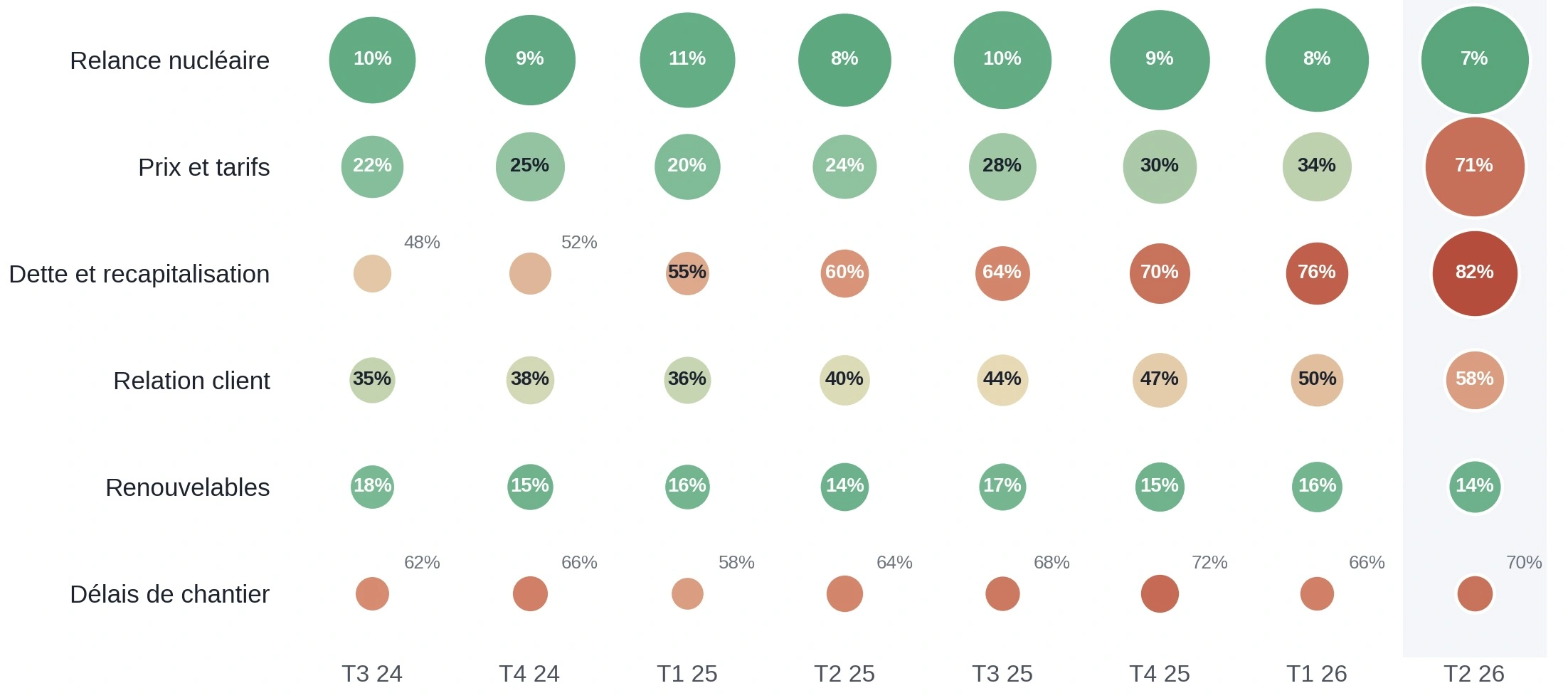
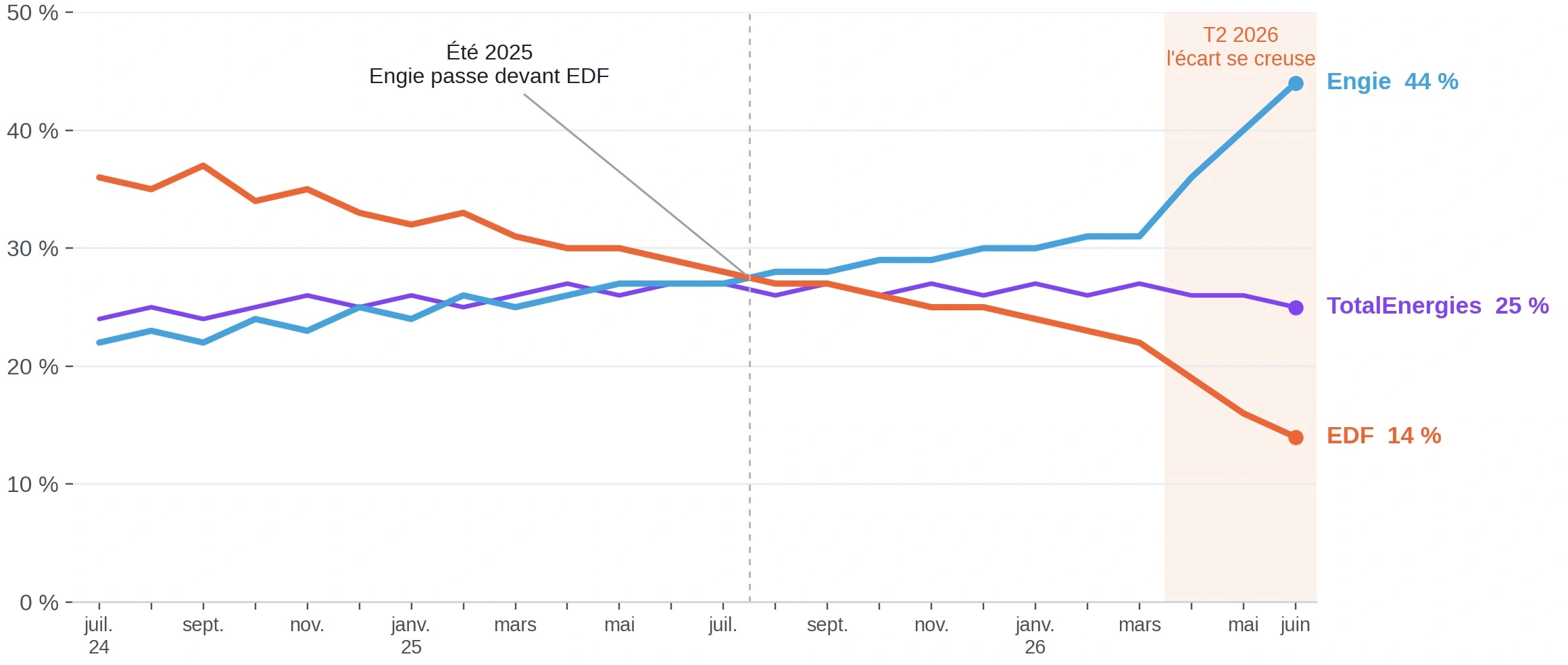
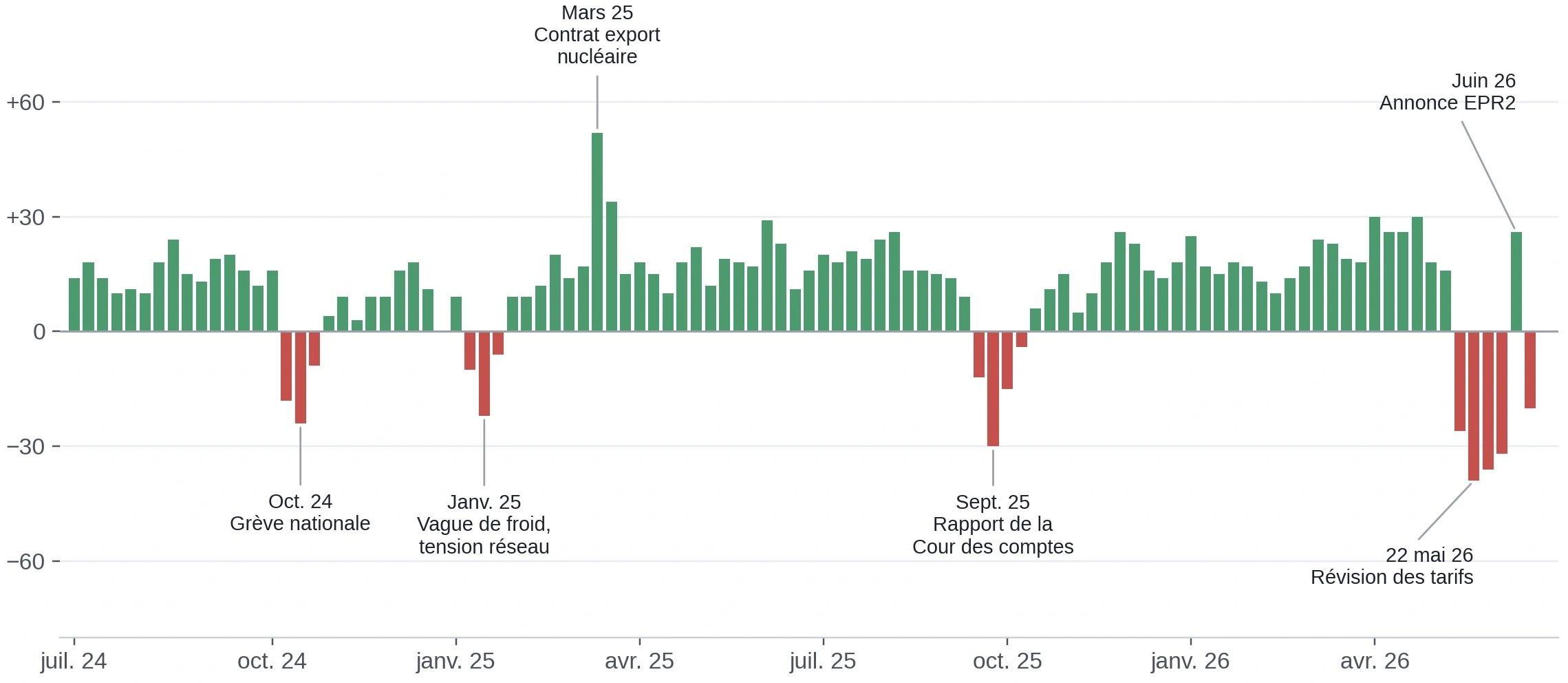
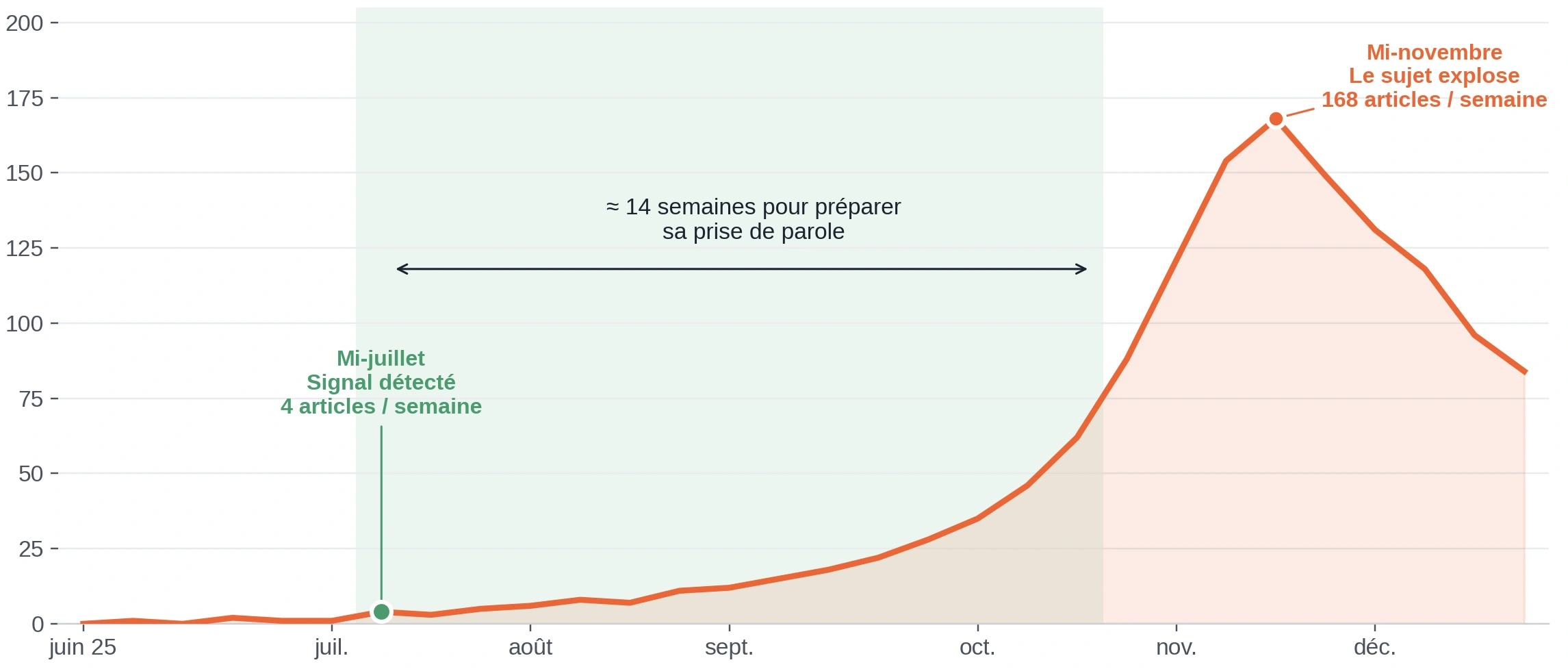
The question is not whether the journalist is well disposed toward you, but what the article leaves in the reader's mind.
| Criterion | The problem with traditional analyses | Article-by-article reading |
|---|---|---|
| Mentions | Mentions counted by keyword, even when you are just part of the backdrop. | Every article is read in full. Those where your brand is only a passing mention are handled separately. |
| Sentiment | A sentiment score that judges the writing, not the impact on your reputation. | Articles that are really about you are assessed on their impact on your image, even when they stay factual. |
The kind of conclusions a report delivers.
Four steps, one document.
Your brand, your competitors, the period and the press regions to cover.
Every article is read. Those where you are only mentioned are set aside.
Narrative, topic, impact on your image, journalist, and what can really be attributed to you.
Figures with commentary, charts, and a ready-to-use summary.
Where do we stand, how are we perceived, how do we compare with others. The report answers them with figures you can explain.
Report on your image with a diagnosis, and decide where to speak up in the next period.
Separate what the sector makes you carry from what comes down to your own decisions.
Walk into your client's office with a reading of how they and their competitors are perceived, and well-supported recommendations.






Media coverage analysis starts from one specific announcement, a press release or a campaign, and measures what it produced. The perception report starts from your brand: it reads everything the press wrote about you over a period, whether or not you were the source.
The likely impact of each article on your reputation, regardless of the journalist's intent. A strictly factual report can damage you, a neutral article can show you in a good light. Each article gets a single label: favorable, neutral or unfavorable.
Because your name often appears where you are not the subject: a market brief, a directory, an events listing. Counting them would skew every proportion. A keyword tool cannot make that distinction: it is a reading decision, made on each article.
Yes. Part of your coverage is about facts you do not decide: a regulatory decision, a political debate, a strike or social movement. The report gives both readings, everything written about you and what comes down to your own decisions, so you know what you can really change.
Yes, it is one of the sections of the report. Your competitors are read with the same method, which tells you whether a proportion is normal for your sector, who owns which topics, and who is gaining ground.
Our AI reads each article in full and understands its context, instead of looking for keywords. A theme is counted when the article deals with it, not when the word appears in it. It runs on proprietary models developed in-house.
Let's talk about your brand and your competitors: we will walk you through a sample report.